

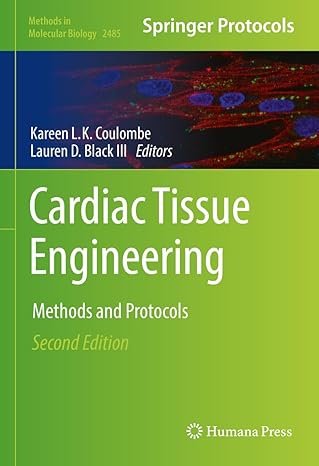
Cardiac Tissue Engineering: Methods and Protocols (Methods in Molecular Biology Book 2485)
Cardiac Tissue Engineering: Methods and Protocols (Methods in Molecular Biology, Volume 2485) is a comprehensive guide that provides detailed, step-by-step laboratory protocols for researchers working in cardiovascular biology, regenerative medicine, and tissue engineering. This volume serves as an essential reference for understanding and applying the latest methodologies in heart tissue regeneration, stem cell biology, and biomaterial design.
Edited by Bo Wang and Wenguo Cui, this authoritative volume in the renowned Methods in Molecular Biology series (Springer Nature) bridges fundamental science and translational applications. It equips scientists and clinicians with reliable experimental tools to create functional cardiac tissues for disease modeling, drug screening, and regenerative therapies.
Key Features:
-
Comprehensive Experimental Protocols:
Covers the entire workflow of cardiac tissue engineering—from cell isolation, stem cell differentiation, and scaffold fabrication to tissue maturation, functional assessment, and in vivo transplantation. -
Step-by-Step Format for Reproducibility:
Each chapter follows the trusted Methods in Molecular Biology structure, including materials lists, detailed procedures, troubleshooting tips, and expert notes, ensuring accurate and repeatable results. -
Cutting-Edge Approaches:
Features 3D bioprinting, microfluidic systems, hydrogel design, biomimetic scaffolds, and organ-on-chip models, reflecting the latest innovations in cardiac regeneration. -
Stem Cell and Biomaterial Integration:
Discusses induced pluripotent stem cells (iPSCs), mesenchymal stem cells, and cardiac progenitor cells, as well as biodegradable polymers, collagen matrices, and nanocomposites for heart tissue construction. -
Functional Evaluation of Engineered Tissues:
Provides techniques for electrophysiological measurements, contractility testing, calcium imaging, and histological analyses, helping researchers assess tissue functionality. -
Clinical and Translational Relevance:
Examines applications in myocardial repair, drug toxicity screening, and personalized medicine, offering a bridge between lab research and therapeutic development. -
Expert Authorship:
Contributions from leading scientists, clinicians, and bioengineers ensure a balance between theoretical background and hands-on experimental expertise.


