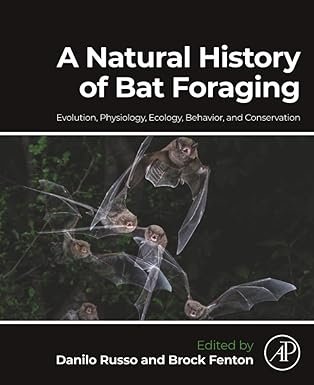
A Natural History of Bat Foraging: Evolution, Physiology, Ecology, Behavior, and Conservation
A Natural History of Bat Foraging is a groundbreaking work that explores one of the most fascinating aspects of mammalian biology—the feeding behavior of bats. Written by leading experts in chiropteran ecology and physiology, this book integrates evolutionary biology, physiology, ecology, behavior, and conservation science to present a comprehensive understanding of how bats locate, capture, and consume their food.
Key Features
-
Evolutionary Insights – Explains how millions of years of evolution shaped bats’ unique foraging strategies, from insect-hunting aerial acrobatics to nectar feeding and fruit dispersal.
-
Physiology and Adaptation – Details the sensory, metabolic, and biomechanical adaptations that enable bats to forage in complete darkness.
-
Behavioral Ecology – Examines the diversity of bat feeding behaviors, including echolocation, prey selection, pollination, and seed dispersal.
-
Conservation Relevance – Highlights the ecological importance of bats in controlling insect populations, pollinating plants, and maintaining ecosystem balance.
-
Comprehensive Approach – Bridges the gap between laboratory research and field studies, making it a valuable reference for scientists and students alike.