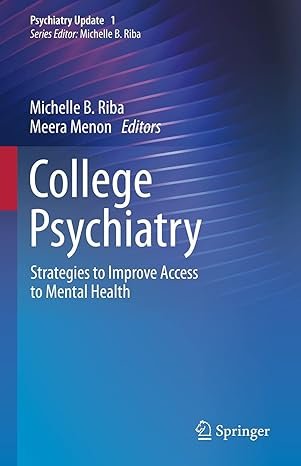
College Psychiatry: Strategies to Improve Access to Mental Health (Psychiatry Update Book 1)
College Psychiatry: Strategies to Improve Access to Mental Health is an essential resource designed for psychiatrists, psychologists, counselors, university administrators, mental health professionals, and students seeking to understand and improve mental health services within higher education. As global rates of stress, anxiety, depression, academic burnout, and crisis situations rise among college students, this book provides timely, evidence-based guidance to build effective and accessible campus mental health systems.
This first volume in the Psychiatry Update series presents practical models, innovative strategies, and interdisciplinary approaches that promote early intervention, stigma reduction, and improved pathways to psychiatric and psychological care. It blends clinical expertise, public health concepts, real-world case studies, and system-level recommendations, making it a must-have reference for institutions aiming to enhance student well-being.
Key Features:
-
Covers the rising global mental health burden among university and college students.
-
Evidence-based strategies for screening, early identification, crisis intervention, and treatment access.
-
Practical guidance for developing campus counseling centers, tele-psychiatry programs, wellness initiatives, and integrated care models.
-
Insight into social, cultural, and academic factors influencing mental health in young adults.
-
Tools for improving mental health literacy, reducing stigma, and promoting help-seeking behavior.
-
Case discussions showing effective collaboration between psychiatrists, psychologists, faculty, administrators, and student affairs departments.
-
Clear frameworks for policy building, resource allocation, program evaluation, and long-term mental health planning.
-
Ideal for clinicians, educators, university decision-makers, mental health researchers, and postgraduate trainees.
With student mental health challenges at an all-time high, this book offers actionable guidance to help institutions create safe, supportive, and accessible care environments. Whether you are a mental health professional working on campus or an administrator shaping policy, this volume helps you design systems that promote resilience and timely intervention.