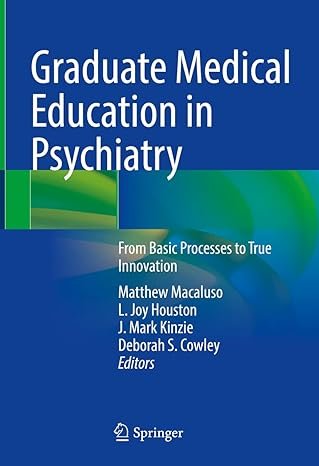
Graduate Medical Education in Psychiatry: From Basic Processes to True Innovation
Graduate Medical Education in Psychiatry is a comprehensive guide for psychiatrists, medical educators, psychiatric trainees, residency program directors, and mental health researchers. This book provides an in-depth exploration of psychiatric education, training methods, and innovative approaches to developing competent, reflective, and adaptive mental health professionals.
Designed to bridge the gap between traditional education and modern demands, this volume focuses on strategies for curriculum design, assessment, competency-based training, mentorship, and fostering innovation in graduate psychiatric programs. It integrates educational theory with practical applications, ensuring that educators, trainees, and institutions can adopt evidence-based strategies to enhance learning outcomes and clinical excellence.
The book addresses key challenges in psychiatric education, including adapting to advances in neuroscience, evolving psychiatric practices, ethical standards, interprofessional collaboration, and technology-driven learning. By combining theoretical foundations with practical examples, case studies, and assessment tools, it empowers readers to implement transformative approaches in both academic and clinical settings.
Whether you are a resident, faculty member, or program administrator, this book serves as a roadmap for fostering professional growth, innovation, and high-quality psychiatric training, making it essential for anyone invested in shaping the next generation of psychiatrists.
⭐ Key Features
-
Comprehensive Coverage: Explores core processes, curriculum development, competency-based education, mentorship, and assessment in psychiatric training.
-
Innovative Approaches: Highlights cutting-edge strategies, including simulation, digital learning, interprofessional education, and reflective practice.
-
Evidence-Based Guidance: Incorporates research and best practices in medical education, tailored specifically to psychiatry.
-
Case Studies & Examples: Practical illustrations for implementing effective teaching, assessment, and program design.
-
Focus on Competency & Professionalism: Addresses knowledge, skills, attitudes, and ethical considerations required for modern psychiatry.
-
Faculty & Trainee Support: Provides tools for educators, mentors, and residents to optimize learning and development.
-
Exam & Curriculum Alignment: Useful for residency programs, licensing examinations, and professional development courses.
-
Global Perspective: Includes international insights and adaptable strategies suitable for diverse training environments.