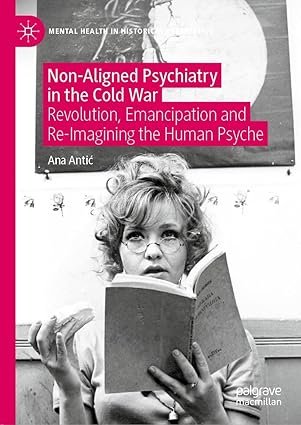
Non-Aligned Psychiatry in the Cold War: Revolution, Emancipation and Re-Imagining the Human Psyche (Mental Health in Historical Perspective)

Price range: ₨ 550 through ₨ 1,200

Non-Aligned Psychiatry in the Cold War: Revolution, Emancipation and Re-Imagining the Human Psyche (Mental Health in Historical Perspective)

Non-Aligned Psychiatry in the Cold War: Revolution, Emancipation and Re-Imagining the Human Psyche is a scholarly and thought-provoking exploration of psychiatry’s role during a transformative period in global history. Part of the prestigious Mental Health in Historical Perspective series, this book examines how non-aligned countries approached mental health differently during the Cold War, challenging traditional Western-dominated psychiatric models and rethinking the relationship between society, politics, and the human psyche.

This book is essential for historians of medicine, psychiatrists, psychologists, social scientists, and students of global health, offering a unique lens on how psychiatry evolved in contexts of political tension, revolutionary thought, and social emancipation. The author delves into the interplay between ideology, clinical practice, and social policy, showing how non-aligned nations sought to create autonomous psychiatric practices that reflected local cultural and social realities rather than imported Western norms.

Through meticulous archival research and rich case studies, the book highlights how mental health care was reimagined, balancing scientific advancement with societal needs. It emphasizes the critical role of psychiatry in shaping concepts of freedom, autonomy, and human dignity in politically complex societies. Readers will gain a comprehensive understanding of how historical and political contexts influence mental health practice, offering insights that remain relevant for modern psychiatric and sociocultural discussions.

Key Features:

  • Historical Insight – Focuses on non-aligned countries’ psychiatric practices during the Cold War.

  • Interdisciplinary Perspective – Combines psychiatry, history, political science, and social theory.

  • Case Studies & Archival Research – Provides rich, documented examples of alternative psychiatric models.

  • Global Mental Health Context – Explores challenges, innovations, and the sociopolitical shaping of mental health care.

  • Part of a Respected Series – Mental Health in Historical Perspective, making it an authoritative reference.


Description

Non-Aligned Psychiatry in the Cold War: Revolution, Emancipation and Re-Imagining the Human Psyche (Mental Health in Historical Perspective)

Non-Aligned Psychiatry in the Cold War: Revolution, Emancipation and Re-Imagining the Human Psyche is a scholarly and thought-provoking exploration of psychiatry’s role during a transformative period in global history. Part of the prestigious Mental Health in Historical Perspective series, this book examines how non-aligned countries approached mental health differently during the Cold War, challenging traditional Western-dominated psychiatric models and rethinking the relationship between society, politics, and the human psyche.

This book is essential for historians of medicine, psychiatrists, psychologists, social scientists, and students of global health, offering a unique lens on how psychiatry evolved in contexts of political tension, revolutionary thought, and social emancipation. The author delves into the interplay between ideology, clinical practice, and social policy, showing how non-aligned nations sought to create autonomous psychiatric practices that reflected local cultural and social realities rather than imported Western norms.

Through meticulous archival research and rich case studies, the book highlights how mental health care was reimagined, balancing scientific advancement with societal needs. It emphasizes the critical role of psychiatry in shaping concepts of freedom, autonomy, and human dignity in politically complex societies. Readers will gain a comprehensive understanding of how historical and political contexts influence mental health practice, offering insights that remain relevant for modern psychiatric and sociocultural discussions.

Key Features:

  • Historical Insight – Focuses on non-aligned countries’ psychiatric practices during the Cold War.

  • Interdisciplinary Perspective – Combines psychiatry, history, political science, and social theory.

  • Case Studies & Archival Research – Provides rich, documented examples of alternative psychiatric models.

  • Global Mental Health Context – Explores challenges, innovations, and the sociopolitical shaping of mental health care.

  • Part of a Respected Series – Mental Health in Historical Perspective, making it an authoritative reference.

Who Should Read This Book:

  • Psychiatrists, psychologists, and mental health professionals

  • Historians of medicine and social sciences

  • Students of global health, political science, and sociology

  • Libraries and academic institutions building mental health and historical collections

Why Buy from Books Hub PK:

  • Original, High-Quality Edition

  • 💰 Best Price in Pakistan – Affordable for students and professionals

  • 🚚 Fast, Secure Nationwide Delivery

  • 📚 Trusted Source for Scholarly and Medical Books

Additional information

Print Quailty

Black & White Print, Colour Matt Finshed

Go to Top